
Last updated November 23, 2026
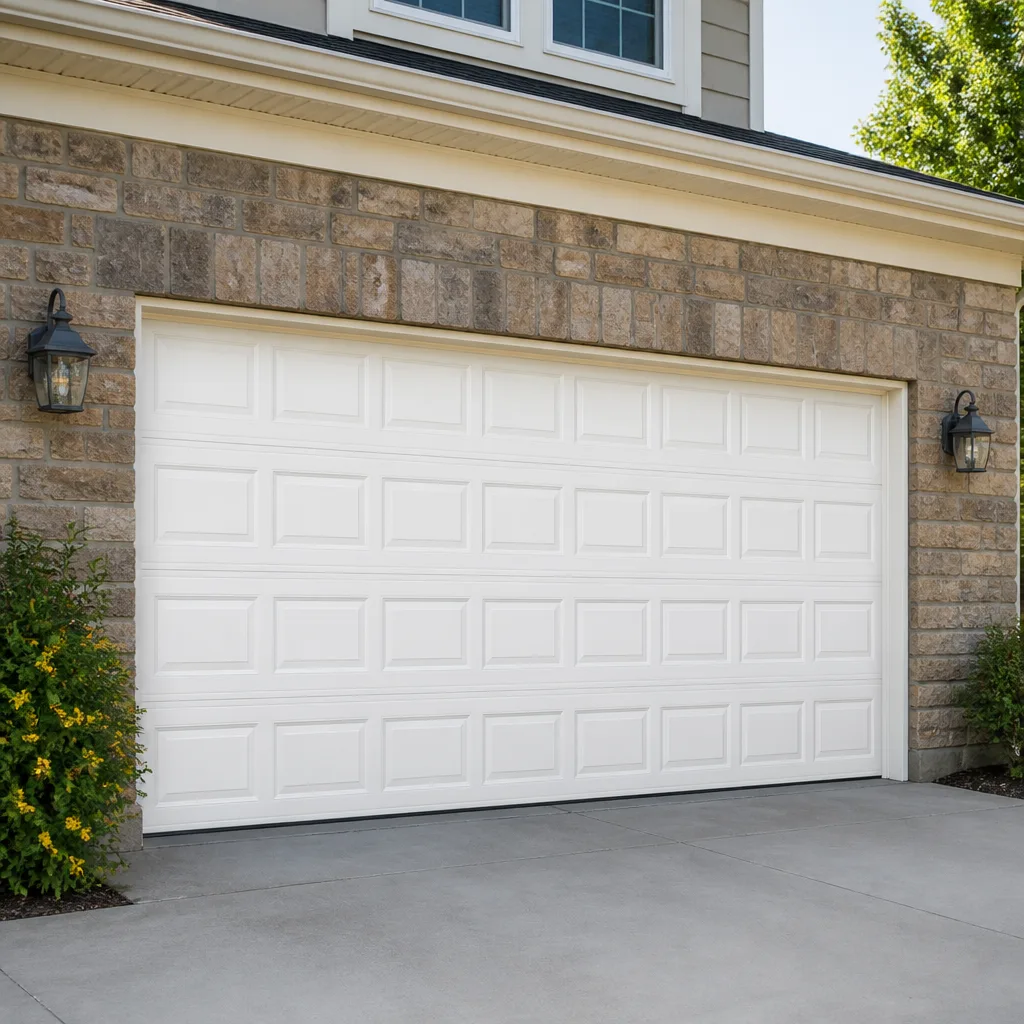 Raised-panel steel
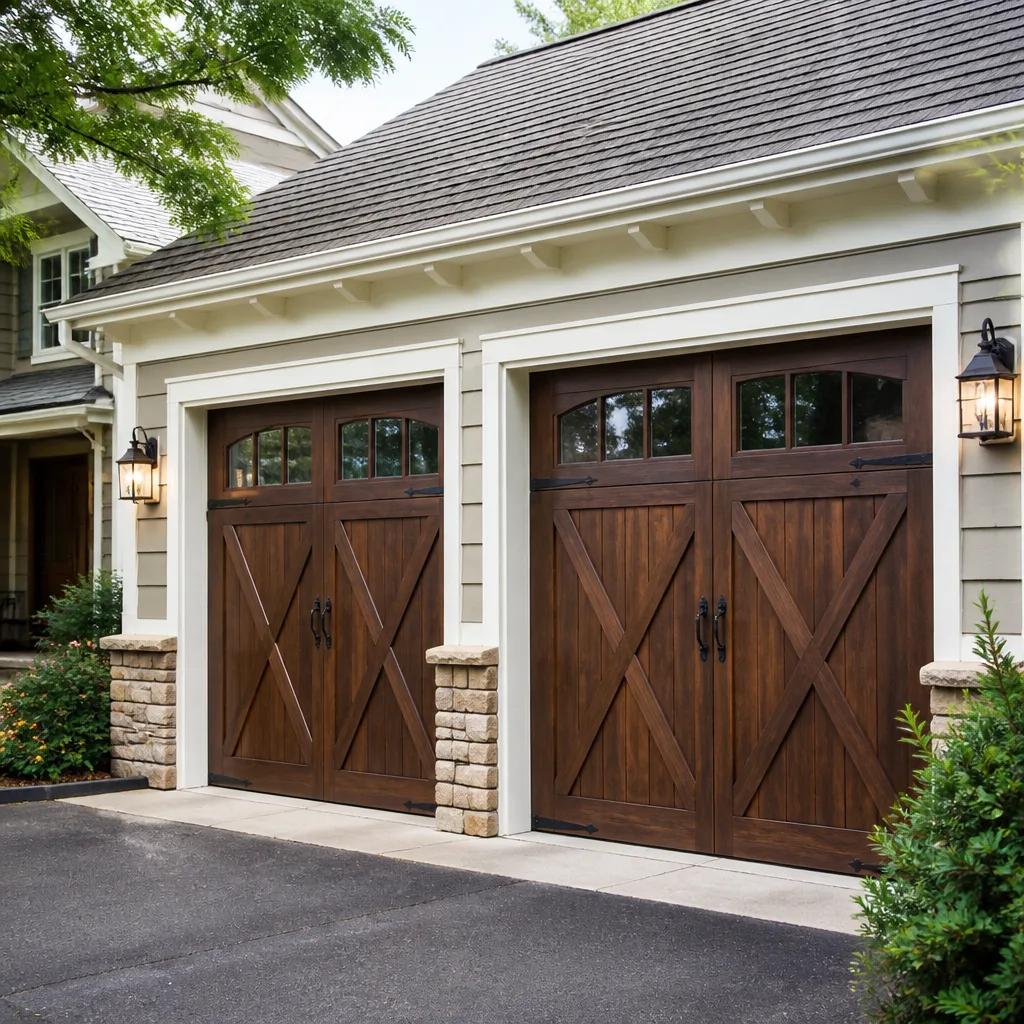 Carriage house
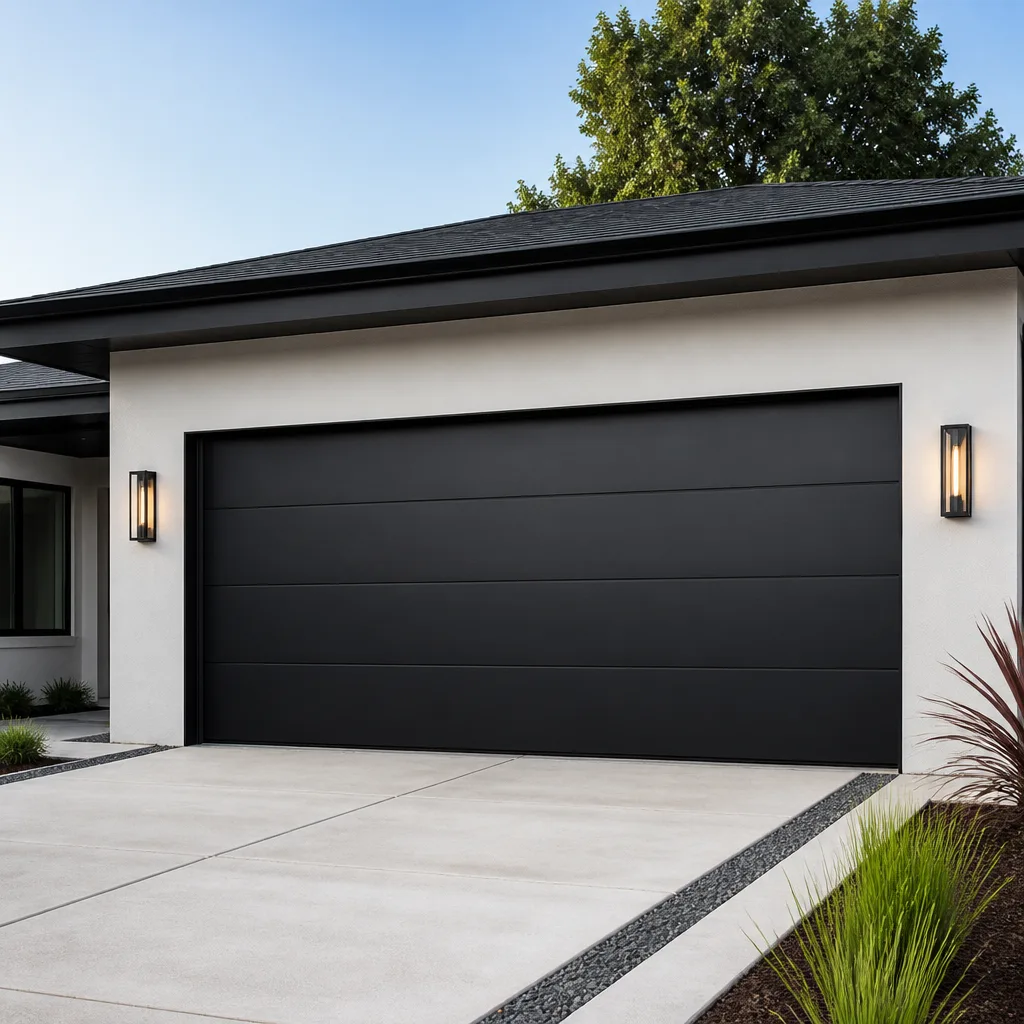 Modern flush
 Full-view glass
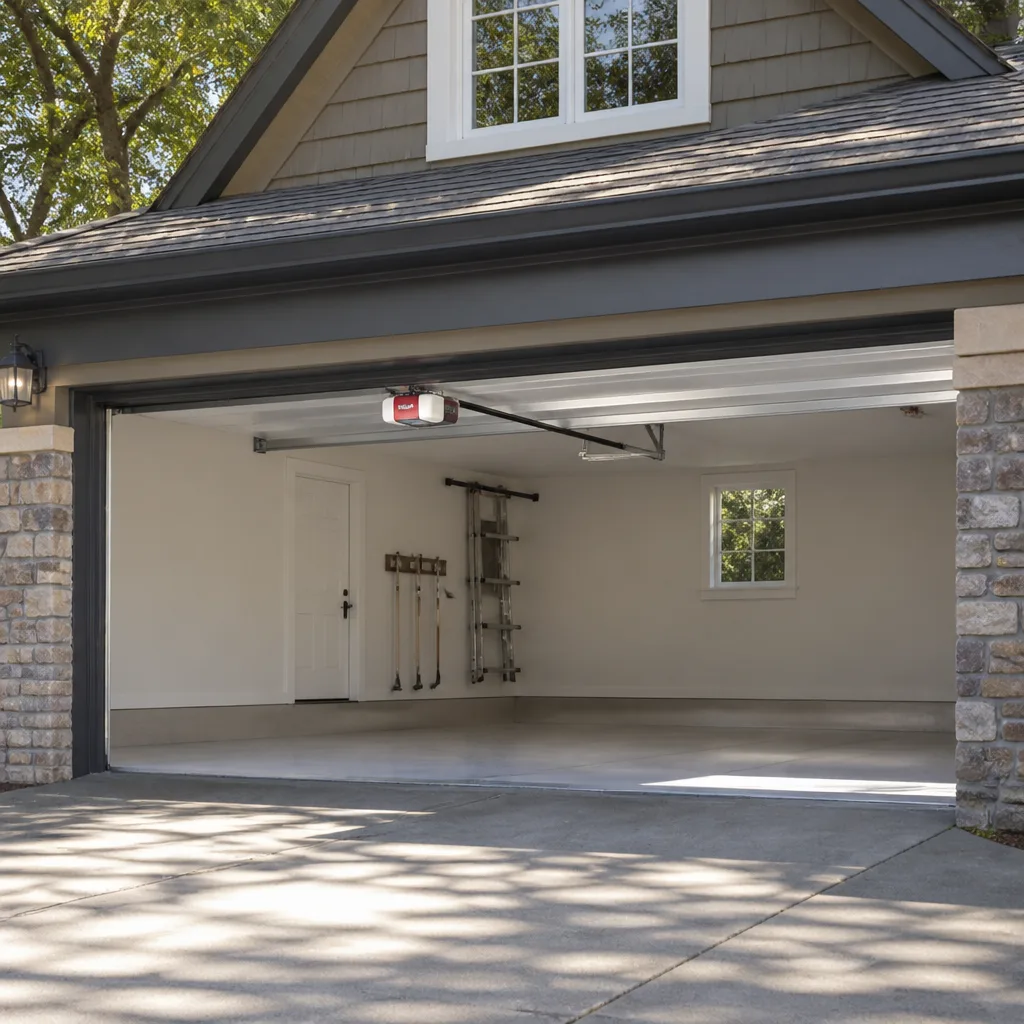 LiftMaster openers
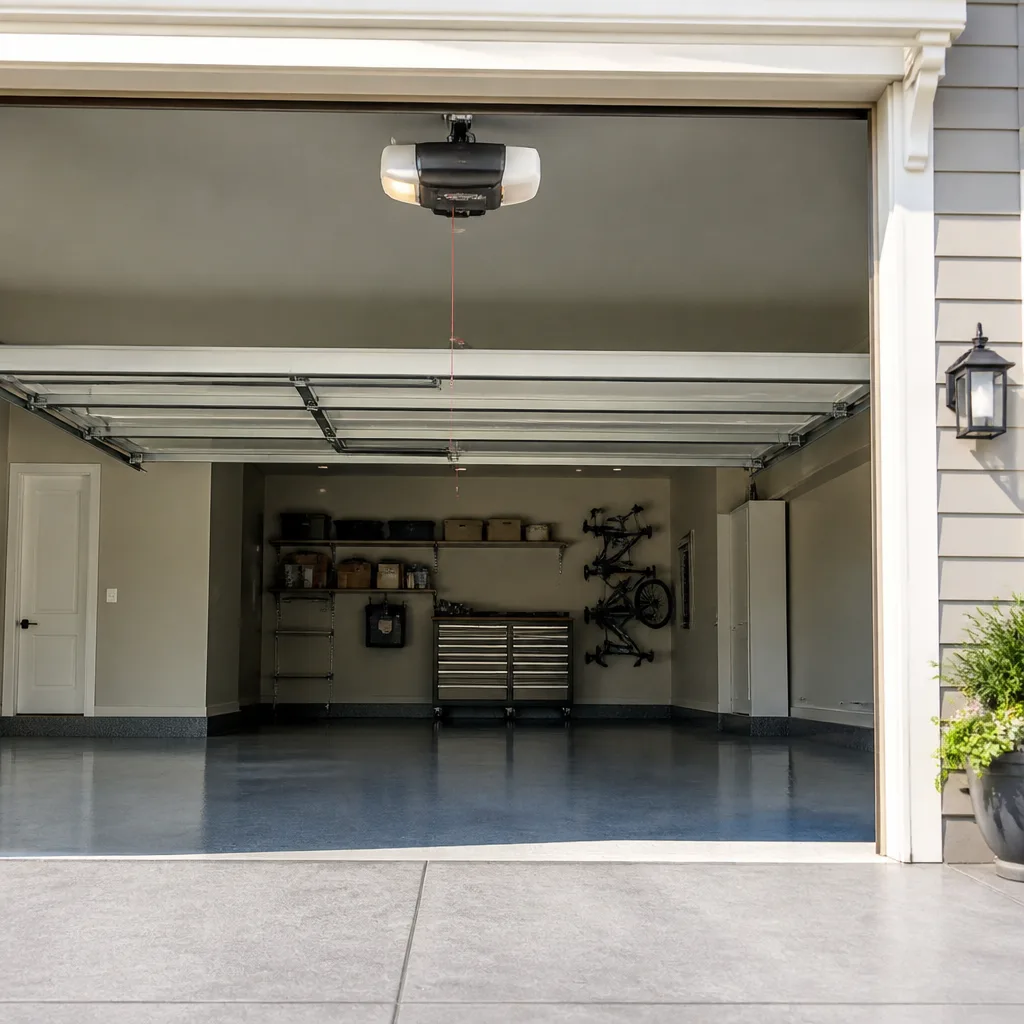 Chamberlain openers
Full 25-point door and opener safety check with every visit - springs, cables, rollers, tracks, and your LiftMaster or Chamberlain opener included
You get a price before we start. It does not change when the pro arrives.
Get your free estimateGarage Door Warning Signs: A McLean Homeowner’s Reference Guide
A garage door doesn’t snap a spring without warning. It gives you weeks of signals first – sounds, gaps, hesitations, small changes in how it moves – and most homeowners either miss them or misread them as “just getting old.” That misreading is the gap between “my door is acting a little weird” and “my door is dangerous,” and it’s smaller than most people think. In this guide we name exactly what to look for at each stage, what every symptom means mechanically, and which ones mean stop using the door today. Everything here is written for McLean homes and McLean weather.
Quick Answer
The warning signs that matter most on a garage door are a broken or stretching spring, a fraying cable, a door that slams down instead of easing closed, a bottom seal with an uneven gap, and an opener that hesitates, reverses, or moves at a changing speed. Of those, a snapped spring or a loose cable means stop using the door immediately and call a trained technician, because both parts are under extreme tension. Cosmetic noises like a light rattle or a dry hinge squeak are normal wear and can wait for a scheduled visit.
Styles & brands we work with
- Raised-panel steel
- Carriage house
- Modern flush
- Full-view glass
- LiftMaster openers
- Chamberlain openers
Table of Contents
- Sounds That Are Normal Wear vs. Sounds That Mean Stop
- Spring and Cable Fatigue You Can See From the Ground
- What an Uneven Gap at the Bottom Seal Actually Tells You
- Opener Behavior Changes and What They Map To
- The One-Sided Drop Test for Door Balance
- Seasonal Signs in McLean’s Climate
- Panel and Hardware Signals Worth Catching Early
- Why the Stakes Are Higher Than They Look
Sounds That Are Normal Wear vs. Sounds That Mean Stop
Most garage doors make noise. The question isn’t whether yours is loud – it’s which kind of loud. A door that has always had a soft rumble and still does is not a warning sign. A door that has changed its sound is. In our experience, homeowners notice a new noise for weeks before they call, and by then the part that was complaining has usually finished failing.
Here’s the split that matters:
- Normal wear noise: a light metal rattle as panels meet, a dry squeak from a roller or hinge, a low hum from the opener motor. These are lubrication and adjustment items.
- Stop-and-call noise: a loud bang from above the door (a spring letting go), a scraping or grinding that wasn’t there before, a snap-crackle from a cable, or a door that drops the last few inches in free fall. Any of these means stop using the door and get a technician out.
- In between: a rhythmic thump or a pop as the door passes a certain height usually points to a roller, hinge, or track issue that’s still fixable before it becomes a safety problem.
If you hear the stop-and-call sounds, don’t cycle the door “just to check.” A door with a failed spring or a slack cable can come down uncontrolled, and the opener is not designed to hold that weight. Shut it, leave it, and call. A garage door spring repair visit will confirm what failed and replace the tension parts safely.
McLean homes with attached garages make this especially worth getting right: a door left in a half-failed state is also the door between your house and the outside. We answer 24/7, and fast dispatch from 7am to 7pm gets a technician to you to make it safe.
Spring and Cable Fatigue You Can See From the Ground
You don’t need a ladder to spot a tired spring or cable. From ground level, with the door closed, look at the parts above the door and along the sides – you’re checking for shape, not measuring anything. This is the check most homeowners never do, and it’s the one that predicts most spring failures.
Here’s what to look at, in order:
- Torsion spring gap. On a torsion system (the spring runs horizontally above the door), a healthy spring is a continuous coil. A visible gap – a clean break in the coil – means the spring has snapped. Stop using the door.
- Extension spring stretch. On an extension system (springs run along the tracks), a spring that looks noticeably longer or more stretched than the one beside it is fatiguing. Springs are usually replaced as a matched pair, so a stretched one means checking both.
- Cable fraying. Look at the steel cables running along each side. Frayed strands, a bird’s-nest tangle, or a cable hanging slack all mean the cable is compromised. Don’t touch it – it’s under tension.
- Rust and corrosion on the coil. Some surface rust is cosmetic; deep pitting and flaking on a spring is a sign it’s near the end of its working life.
Both springs and cables are under extreme tension. Never attempt to adjust, remove, or “tighten” either one yourself. This is the single most dangerous component on any garage door system, which is why we treat spring repair as its own dedicated service rather than a side job. If you can see any of the four signs above, book a garage door spring repair visit and let a technician handle it.
What an Uneven Gap at the Bottom Seal Actually Tells You
An uneven gap along the bottom of a closed door is not one problem – it’s a symptom with three common causes, and each points to a different fix. Standing inside the garage with the door down and the light on is all it takes to see it. A sliver of daylight at one corner, a gap that widens toward one side, or a seal that touches in the middle but lifts at both ends each tell a different story.
- Track out of alignment. If the gap is wider on one side and the door seems to lean, a track has likely been knocked out of plumb – common after the door is bumped, or after a heavy object leans against a track. This is an adjustment, not a replacement, if caught early.
- Floor settling. McLean’s older properties, especially around the Chesterbrook and Langley Forest areas, sit on ground that has shifted over the decades. A floor that slopes slightly under one corner of the door produces a gap even when the door is perfectly square. A new bottom seal with a deeper profile often closes it.
- Worn or hardened seal. The rubber or vinyl strip itself hardens and flattens with age. If the door is square, the tracks are straight, and the gap follows the whole length, it’s the seal. This is one of the least expensive fixes on the list.
Why it matters beyond drafts: a gap at the bottom is also a gap for weather, insects, and small animals, and it’s the most common way a door that looks fine is still letting McLean’s humid summer air into the garage. If the gap changes as the door moves, though, don’t just replace the seal – get the tracks checked, because a moving gap usually means the door is tracking unevenly.
Opener Behavior Changes and What They Map To
Your opener doesn’t have many ways to complain, so when its behavior changes, the message is usually specific. A door that hesitates at the start, reverses partway down, or moves at a different speed than it used to is telling you which part of the system is straining. Mapping the symptom to the cause saves a lot of guessing.
- Hesitation before moving. The opener starts, pauses, then engages. Often a sign of a binding door or a failing capacitor in the motor. On older mechanical units this shows up gradually; on modern smart systems it can also be a signal issue.
- Reversing partway down. The door goes down, then goes back up. This is usually the safety reverse system doing its job – it detected an obstruction or a misaligned sensor – but if the path is clear, the cause is often a door that’s binding in the tracks.
- Slowing down or speeding up mid-travel. The door moves unevenly. This points to a balance problem (see the drop test below) or a worn roller or hinge. The opener is working harder at one point in the cycle.
- Strain sounds from the motor. A grinding or laboring hum that wasn’t there before. On a Craftsman or LiftMaster unit, this can be a gear or drive issue as much as a door problem, so it’s worth a proper diagnostic rather than a guess.
- Remote or keypad range dropping. Intermittent response from a remote that used to work from the driveway usually means the logic board or antenna, not the door.
We work on both older mechanical openers and modern smart-home systems, across LiftMaster, Chamberlain, Genie, and Craftsman, so a garage door opener repair call gets the actual cause diagnosed rather than a parts swap. If the opener is confused by a binding door, replacing the opener won’t fix it – the door has to move freely first.
The One-Sided Drop Test for Door Balance
An imbalanced door is the quiet cause behind a lot of opener failures, and the drop test is how you find it without tools. A balanced door should be able to hold itself at roughly the halfway point. If it can’t, the opener is carrying weight it was never designed to carry – and it’s wearing out faster because of it.
Here’s the safe version of the test. Do this with the door disconnected from the opener and with no one standing under it:
- Close the door and pull the manual release cord to disconnect the opener (the door should be able to move by hand).
- Lift the door to about waist-to-chest height and let go gently.
- Watch what it does. A balanced door stays roughly where you left it. An imbalanced door either sinks on its own or rises on its own.
- Note which side sags. A door that sags on one side points to a cable or track problem on that side; a door that sinks evenly on both sides usually points to spring tension.
- Reconnect the opener only after you’re done, and don’t force the door if it fights you.
What an imbalanced door does to the opener over time is straightforward: the motor compensates for weight it shouldn’t have to lift, the drive train wears faster, and the safety reverse system gets less reliable. On a door with Clopay or Amarr panels, imbalance also stresses the hinges and rollers, so you end up replacing more than the spring. If the drop test shows a sag on one side, stop using the opener until a technician checks it – the imbalance doesn’t fix itself, and it gets worse.
Seasonal Signs in McLean’s Climate
A garage door in McLean lives through four distinct seasons, and each one stresses a different part of the system. Northern Virginia’s humid summers and cold winters work the door in ways a mild climate never does, which is why the warning signs here show up on a predictable calendar.
- Humid summers. Moisture works into hinges, rollers, and the bottom seal. A squeak that appears in July and disappears in October is usually a lubrication issue – but a seal that’s hardened over the summer won’t recover, and a gap that opens in late summer is often the seal, not the tracks.
- Cold snaps. Springs lose some tension in cold weather, and a spring that’s near the end of its life is more likely to fail on the first cold morning than in mild weather. If your door feels heavier in January, that’s a real signal, not imagination.
- Freeze-thaw cycles. McLean gets enough freeze-thaw to shift ground under a garage slab over the years. A gap that opens in early spring and closes by summer is often the floor, and a deeper-profile bottom seal is the usual fix.
- Fall debris. Leaves and grit in the tracks cause binding, hesitation, and false reverses. A quick track clean in the fall prevents a surprising number of “my opener is broken” calls.
We see these patterns across McLean neighborhoods – from the older homes near Salona Village to the newer construction off Old Dominion Drive – and the seasonal timing is consistent enough to plan around. If a sign appears on schedule, it’s usually wear; if it appears out of season, it’s worth a closer look.
Panel and Hardware Signals Worth Catching Early
Panel and hardware problems are the ones homeowners tend to live with, because the door still works. That’s exactly why they’re worth catching early – small panel issues become structural, and structural issues become replacement. A dent you can see is less important than what it’s doing to the rest of the door.
- Dents and creases in a panel. A crease in a steel panel weakens that section and can throw the door out of balance. On a Wayne Dalton or Raynor door, a single damaged panel is often replaceable on its own, which is far less than a new door.
- Hinges that are pulling away. Loose or bent hinges put stress on the panel they’re attached to. This is a small fix if caught before the panel cracks around the screw holes.
- Rollers that are flat-spotted or worn. Worn rollers make the door noisy and uneven. They’re inexpensive and they prevent a lot of track and opener problems.
- Loose or missing bolts on the hinges and brackets. Vibration loosens hardware over time. A door that rattles more than it used to is often just loose bolts, but on a moving door that’s still worth checking before the hardware works free.
- Bowing or sagging panels. A panel that’s visibly bowed is a structural signal, not cosmetic. It usually means the door is out of balance or a track is out of alignment, and it needs a professional look.
A full garage door repair visit addresses all of these together, which is cheaper than handling each one as it fails. Panel damage on a Clopay or Amarr door can often be repaired rather than replaced – but only if the underlying cause (usually balance or track alignment) is fixed at the same time.
Why the Stakes Are Higher Than They Look
A garage door is the largest moving object in most homes, and it’s held up by parts under extreme tension. That’s the reason the warning signs in this guide matter more than the same symptoms would on a fence or a gate. The springs and cables are the dangerous parts – they store enough energy to cause serious injury if handled without the right tools and training – and a door that comes down uncontrolled is a hazard to anything underneath it.
There’s a security side too. A door left stuck open, or one that reverses partway down, is a gap in the building envelope. That’s why emergency service is part of what we do rather than an afterthought, and why a stuck door in McLean gets treated as a same-day priority. Our technicians have up to 15 years of experience, and they’ve seen every one of these signs at the point where it turns from wear into failure. If you’re unsure whether a symptom is cosmetic or serious, the safe move is to stop using the door and get it looked at. Guessing is the one approach we’d steer you away from.
Common Mistakes to Avoid
- Treating a new noise as normal wear. A door that’s always been loud is normal; a door that’s suddenly loud is not. The change in sound is the signal, and waiting for it to “settle down” usually means waiting for the part to fail.
- Cycling a door with a visible spring gap. A door with a snapped torsion spring can come down under its own weight. Don’t test it – shut it and call. This is the single most common mistake we’re called out to correct.
- Trying to adjust a cable or spring yourself. These parts are under extreme tension. This is not a homeowner repair, and the injury risk is real. Leave it to a trained technician.
- Replacing the opener when the door is the problem. A binding or imbalanced door puts strain on the opener. Replacing the opener without fixing the door just wears out the new one faster.
- Ignoring an uneven bottom gap until winter. A gap at the seal lets in cold air, moisture, and pests. In McLean’s humid summers, that same gap lets moisture into the garage, which is hard on anything stored there.
- Assuming a reversing door is “just the safety sensor.” Sometimes it is. But a door that reverses on a clear path is usually binding, and that won’t fix itself.
- Skipping the drop test. It’s the fastest way to find an imbalance before it costs you an opener. Two minutes with the door disconnected tells you more than an hour of guessing.
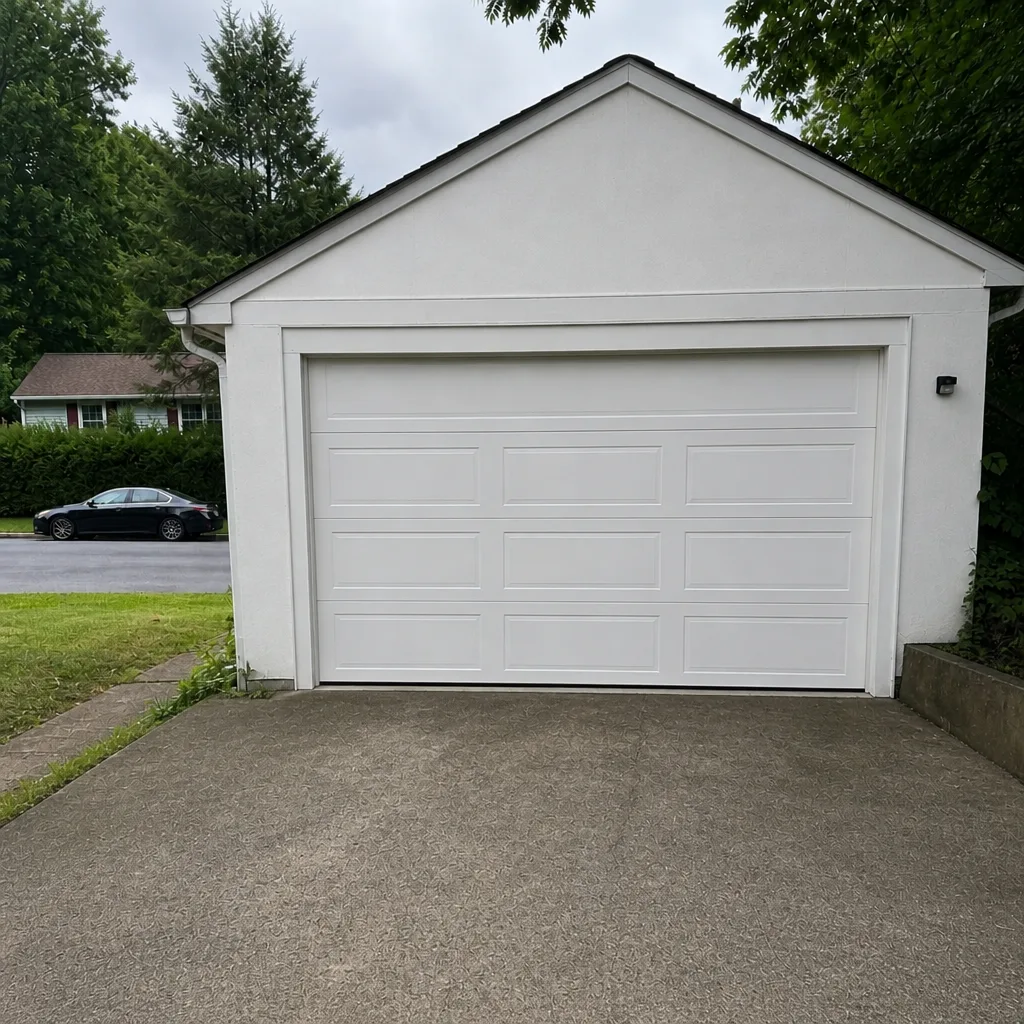
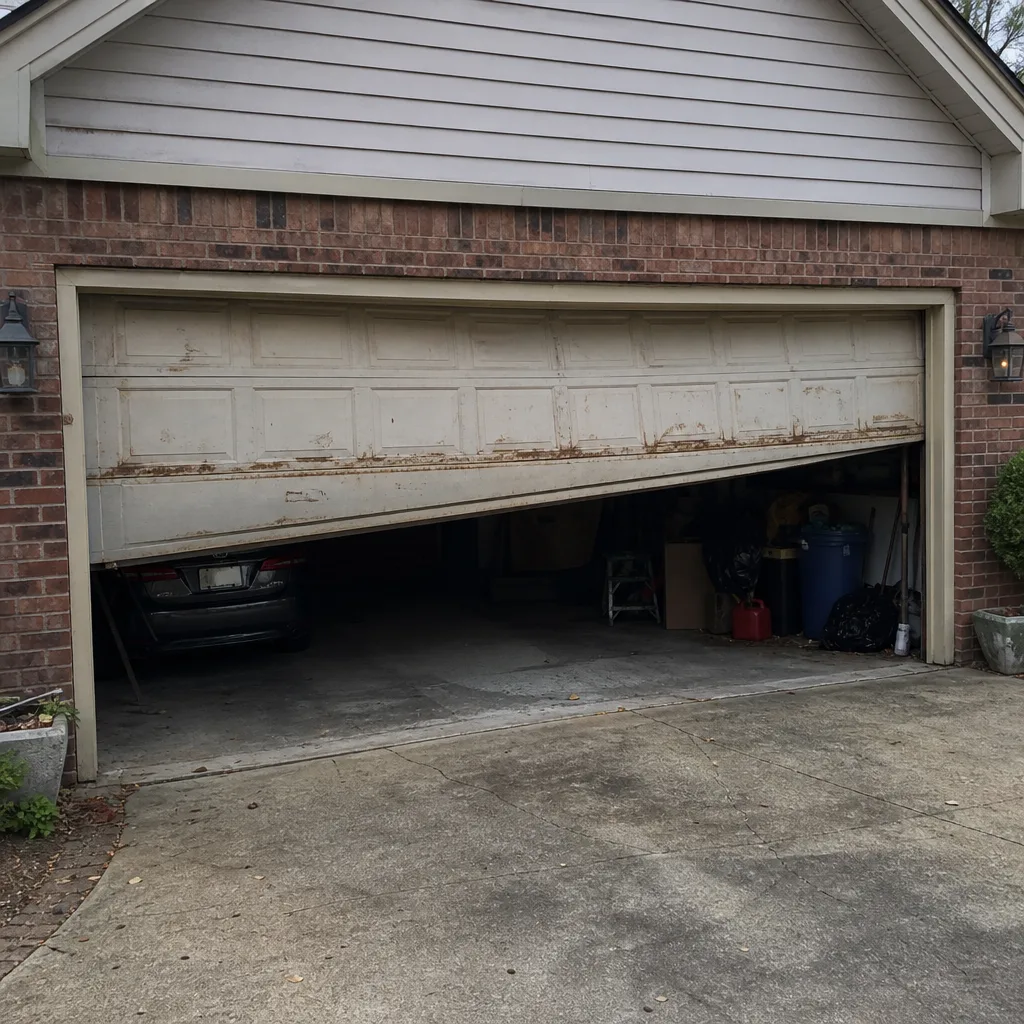
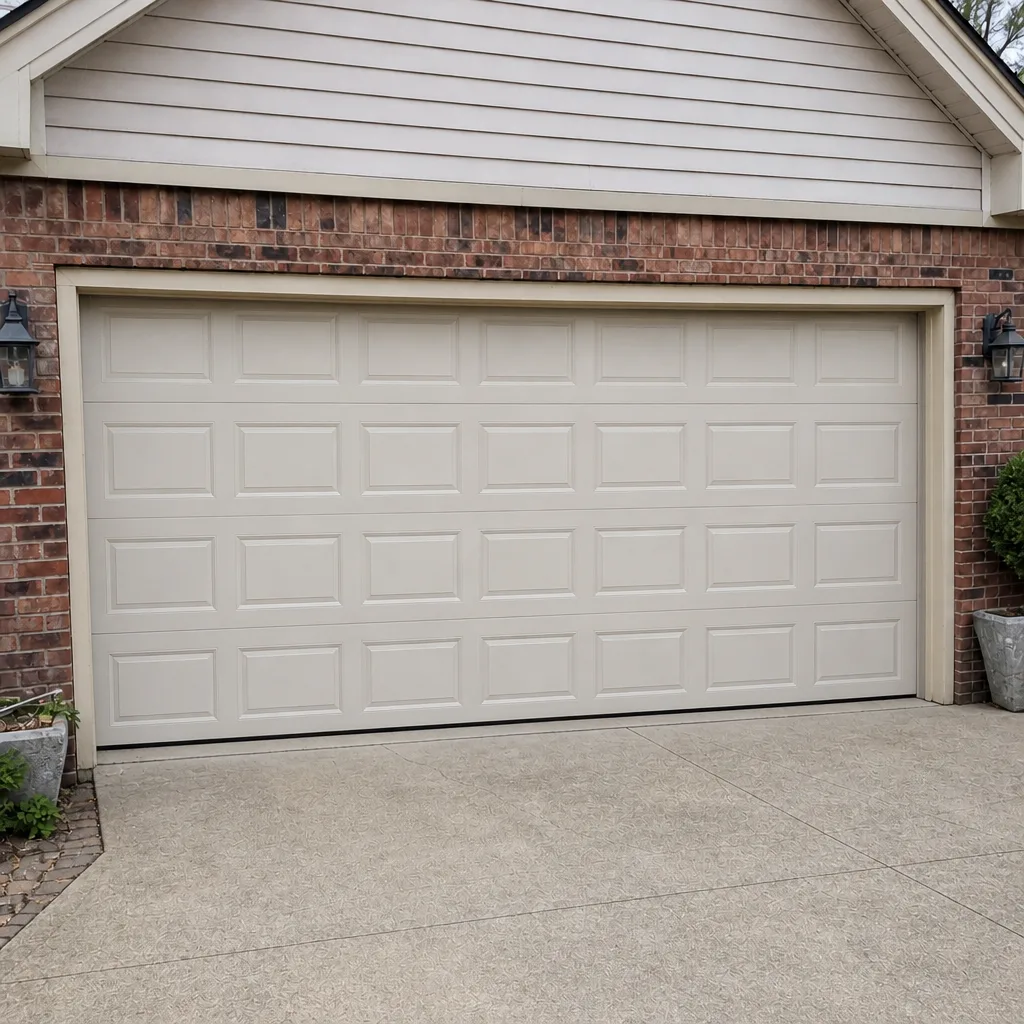
See the difference
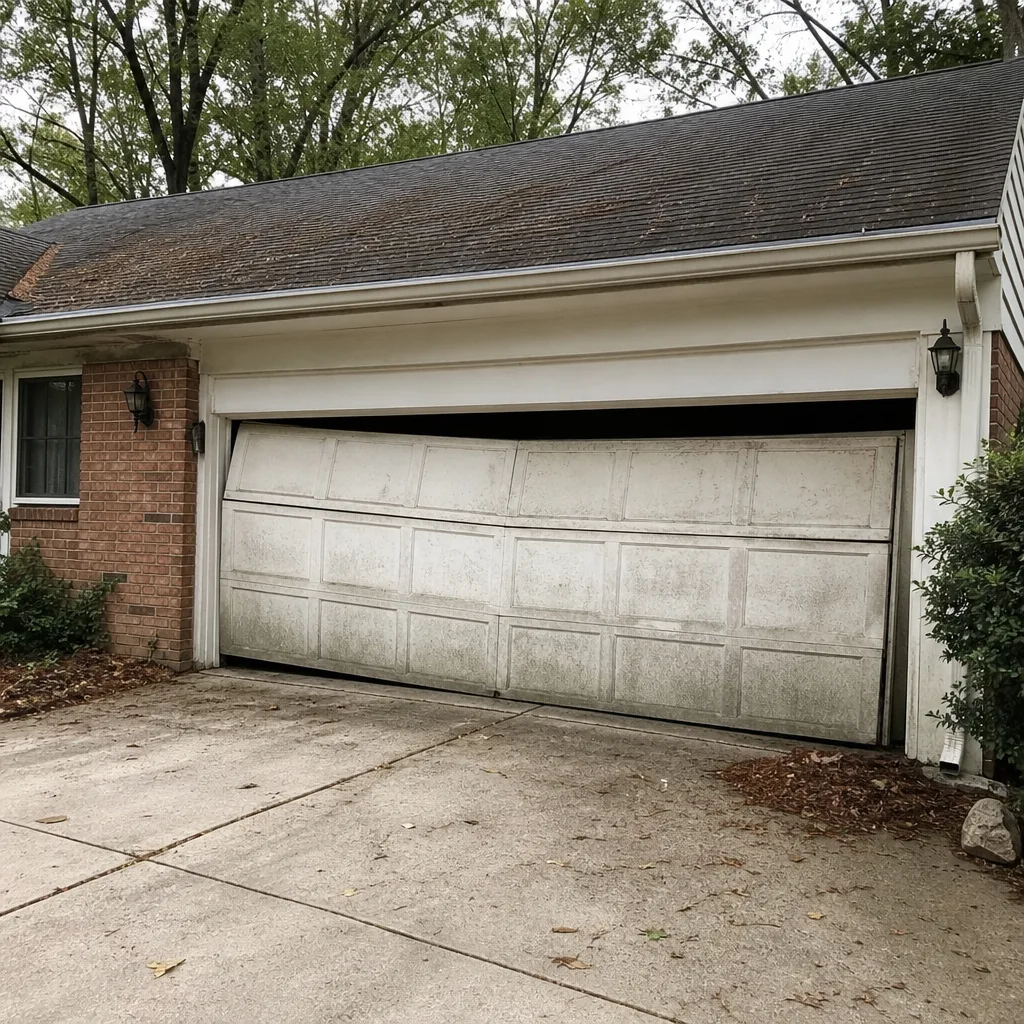 Before
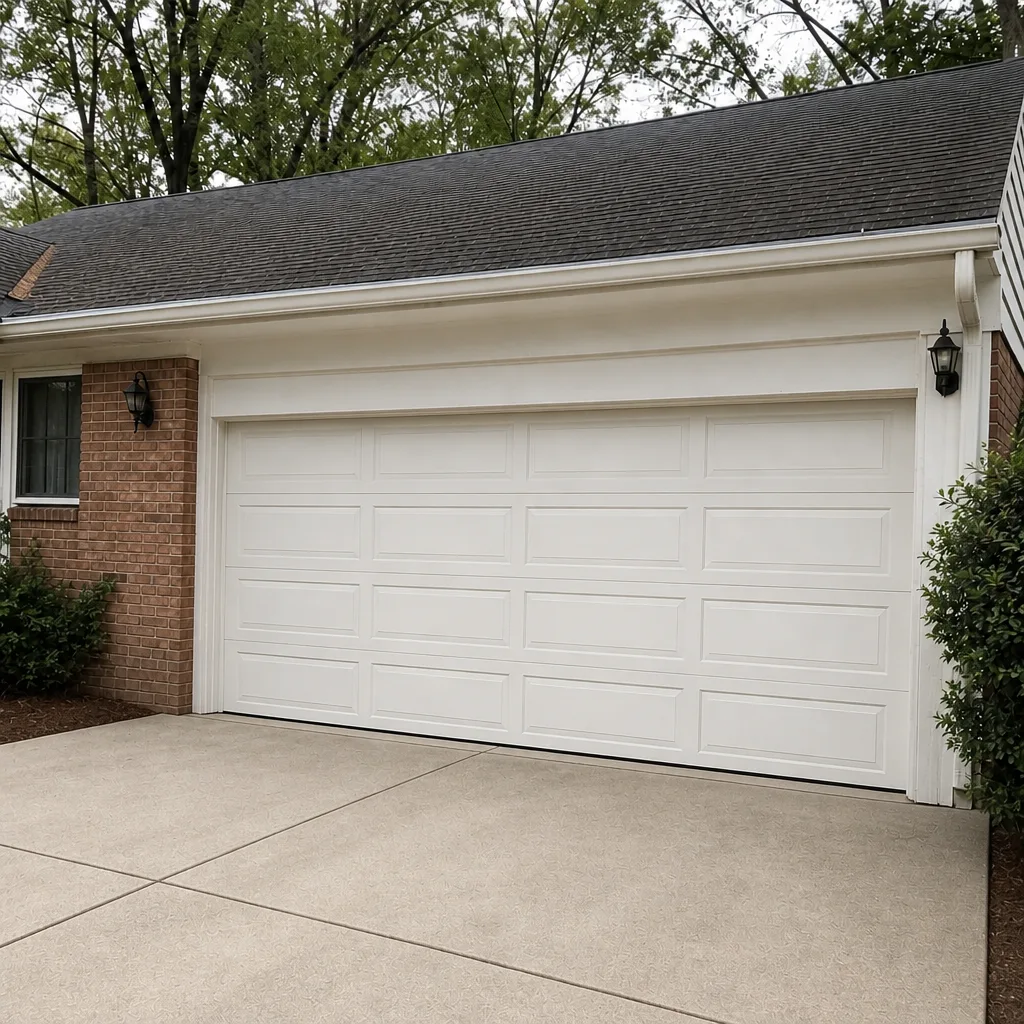 After
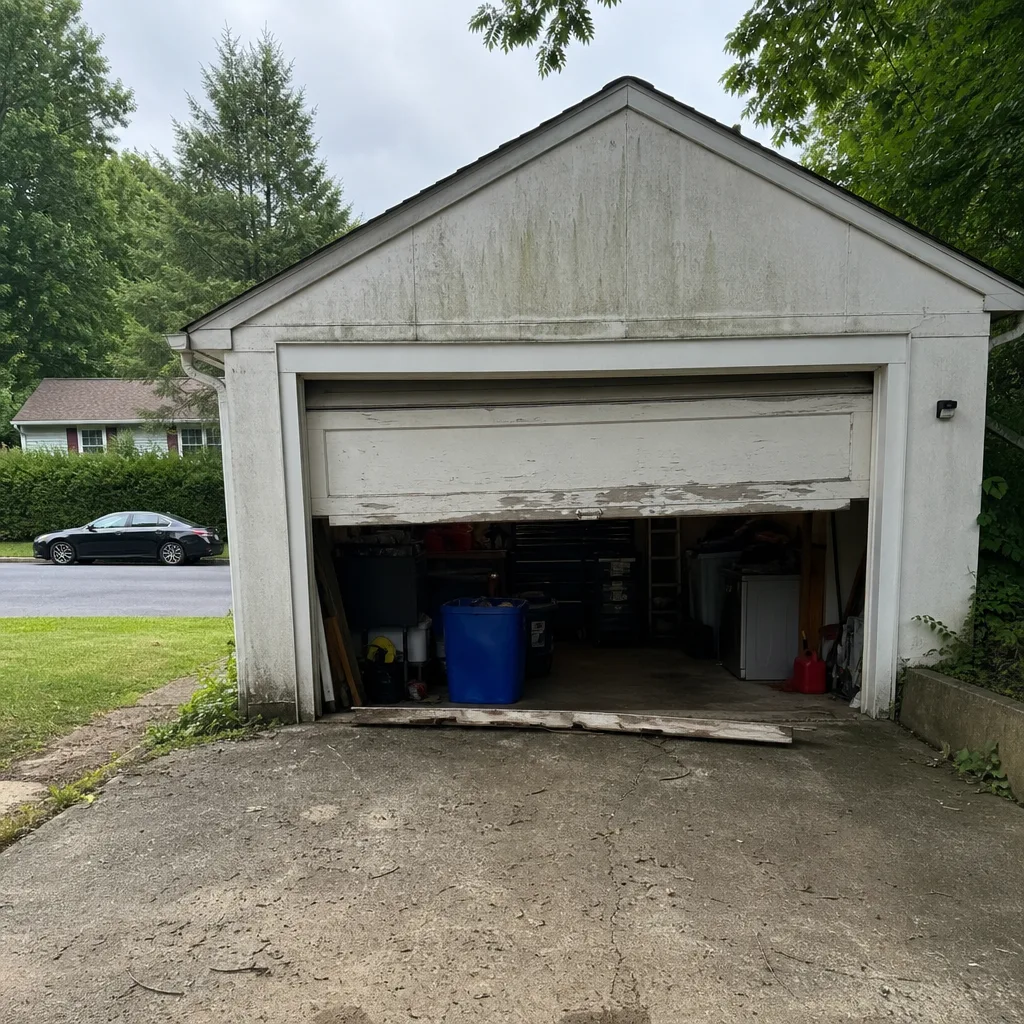 Before
 After
 Before
 After
When to Call a Professional
Call a professional if you see a gap in a torsion spring, a frayed or slack cable, a door that drops in free fall, a door that reverses on a clear path, a visible sag on one side after the drop test, or a panel that’s bowing. Call sooner if the door is stuck open (a security gap) or has come off a track. And call if a symptom has changed in the last month – a new noise, a new hesitation, a new gap – even if the door still opens. The pattern in all of these is the same: the door is telling you something, and the cost of catching it early is far lower than the cost of a failure. McLean Garage Door Repair offers free estimates in McLean – call (855) 629-6238.
Frequently Asked Questions
A visible gap in the torsion spring coil, or a door that suddenly feels much heavier to lift, is the first clear sign. A snapped spring usually announces itself with a loud bang from above the door, and the door won’t lift under opener power afterward. If you see a gap in the coil, stop using the door and call (855) 629-6238 for an estimate.
No. A door that has always made a soft rumble and still does is normal wear. A door that has changed its sound – a new grind, a new bang, a new scrape – is a problem, and the change is what to watch for. Call (855) 629-6238 if a new noise has appeared in the last few weeks.
A gap at the bottom seal usually means one of three things: the track is out of alignment, the floor has settled slightly under one corner, or the seal itself has hardened and flattened. If the gap changes as the door moves, get the tracks checked – that’s an alignment issue, not a seal issue. Estimates are free; call (855) 629-6238.
No. Garage door springs and cables are under extreme tension and are the most dangerous components on the door. Adjusting or replacing them without the right tools and training can cause serious injury. This is precision work for a trained technician – call (855) 629-6238 and we’ll get a technician out to handle it.
Hesitation usually points to a binding door or a failing motor capacitor; reversing partway down on a clear path usually means the door is binding in the tracks or the safety reverse system is misaligned. Both are fixable, and both get worse if ignored. Call (855) 629-6238 for a diagnostic and an upfront price before any work starts.
Use the drop test: disconnect the opener, lift the door to about halfway, and let go gently. A balanced door stays roughly where you left it; an imbalanced door sinks or rises on its own, and a sag on one side tells you which side is the problem. If the door sags on one side, stop using the opener until a technician checks it – call (855) 629-6238, and we’ll quote the job before we start.
The Bottom Line
A garage door gives you weeks of warning before it fails – the problem is that most of the signals look like ordinary wear. Watch for a change, not just a noise: a new sound, a new gap, a new hesitation, a sag on one side after the drop test. The signs that mean stop are a spring gap, a frayed cable, a free-falling door, and a door that reverses on a clear path. The rest can usually wait for a scheduled visit – but they’re worth booking, because catching them early is far cheaper than a failure. When your door fails, response time matters. Call (855) 629-6238 for a free estimate. We answer 24/7. Fast dispatch from 7am to 7pm, Sunday through Friday. Every price is quoted and agreed before any work starts, and the written estimate sets the final price. We work on your brand – LiftMaster, Chamberlain, Genie, Clopay, Amarr, Wayne Dalton, Craftsman, and Raynor – and we’ll recommend what’s right for your door rather than a single brand.
Written by the team at McLean Garage Door Repair.